CIJ and laser coding on rigid plastic HDPE container production line — Videojet India

Coding & Marking on Rigid Plastic Containers | CIJ, Laser & TIJ Solutions for India

Industrial coding and marking solutions for printing on rigid containers

Rigid plastic containers — including HDPE, PET, PP, and PVC — are used across India’s edible oil, agrochemical, pharma, personal care, food & beverage, and paint industries. Every container requires accurate batch number, expiry date, MFD, and MRP coding to meet FSSAI, Legal Metrology, and BIS compliance requirements. Videojet offers three proven technologies for printing on rigid plastic containers: continuous inkjet (CIJ) for high-speed non-contact variable data coding, laser marking for permanent zero-consumable codes, and thermal inkjet (TIJ) for high-resolution printing on medium-speed lines. All solutions are optimised to adhere reliably to low surface energy plastic substrates — including unpretreated HDPE and polypropylene — without smearing or dropout.

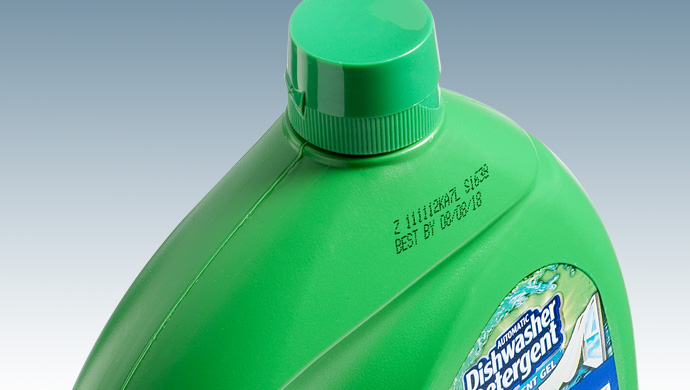
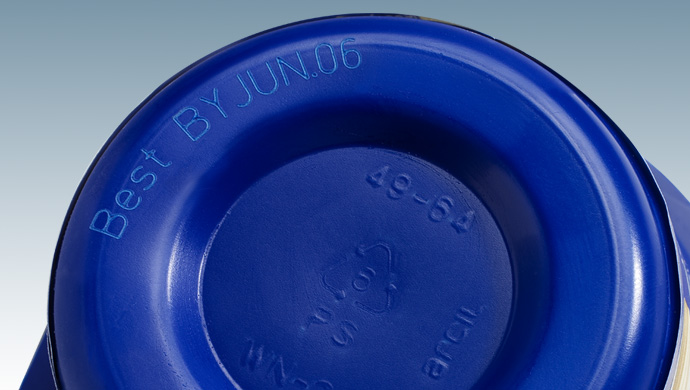
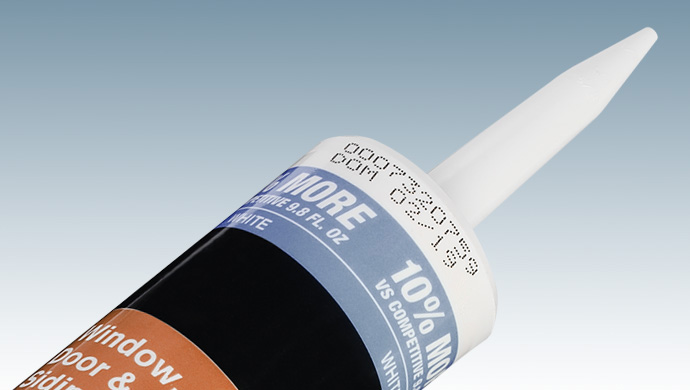
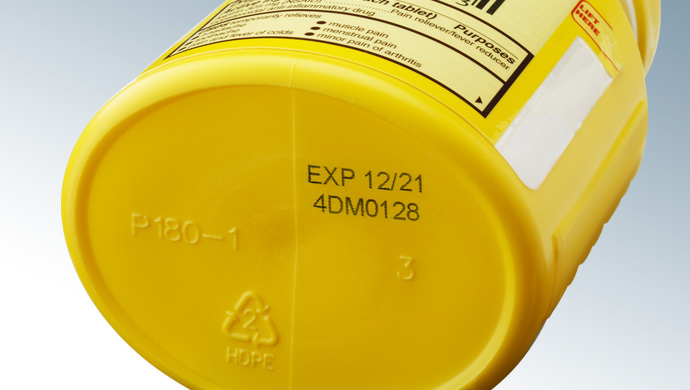
Both continuous inkjet (CIJ) printing and laser marking are recommended for coding rigid plastic packaging.

What gets printed on plastic containers and bottles in India?

  • Expiry date and best-before date (BBD) — mandatory under FSSAI and Drug Labelling Rules for food, beverage, and pharma rigid plastic containers
  • Manufacturing date (MFD) — required on pharma, FMCG, edible oil, and agrochemical plastic containers across India
  • Batch number and lot code — for production traceability, quality control, and targeted recall management
  • MRP and net quantity — Legal Metrology (Packaged Commodities) Rules, 2011 compliance for all pre-packaged goods in India
  • Barcodes and QR codes — GS1 India compliant 1D and 2D codes for supply chain traceability and retail scanning
  • Brand name, product code, and regulatory marks — for BIS, FSSAI, and CIB (Central Insecticides Board) registered agrochemical container labelling

Continuous inkjet (CIJ) printing on plastic containers

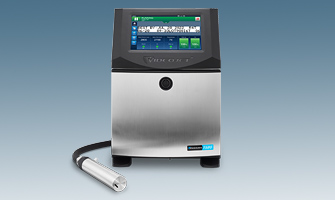
Continuous inkjet (CIJ) is the most widely used coding technology for high-speed rigid plastic container lines across India’s FMCG, edible oil, pharma, and agrochemical industries. Non-contact printing handles curved, tapered, and embossed container surfaces without contact marks or smearing. Videojet’s ink range for plastic containers includes: food-safe inks for edible oil and beverage HDPE containers, high-adhesion fast-dry inks for polypropylene and low surface energy plastics, and high-contrast pigment inks for black, dark, or coloured rigid containers. CIJ is the ideal solution for printing expiry dates, MFD, batch numbers, MRP, and barcodes on HDPE, PET, and PP containers at full production line speed — meeting FSSAI and Legal Metrology compliance requirements.

Laser marking on plastic containers

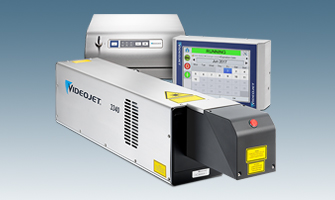
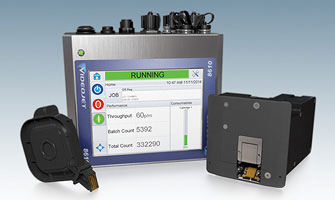
Laser marking creates permanent, tamper-proof codes directly on the surface of rigid plastic containers — with no ink, no solvent, and no consumable cost. A colour change or engraving effect produces expiry dates, batch numbers, barcodes, and brand marks that cannot be wiped off, altered, or removed. This makes laser the preferred coding solution for pharma, agrochemical, and regulated FMCG manufacturers in India who require non-repudiable compliance marking. CO2 lasers (Videojet 3350) work on HDPE, PET, PVC, and nylon; fiber lasers (Videojet 7340/7440) are ideal for high-contrast colour-change marking on black or dark rigid plastics; UV lasers offer low-heat marking for heat-sensitive plastic containers.

Thermal inkjet (TIJ) printing on plastic containers

Thermal Inkjet (TIJ) printing is an advanced ink-based coding technology that provides high-quality, precise printing on plastic containers. This solution is ideal for applications requiring high-resolution text, barcodes, and logos on a wide range of plastic surfaces, including bottles, containers, and jars.

With its versatility and superior print quality, TIJ is perfect for low and medium-speed production lines in the food, beverage, cosmetics, pharmaceuticals, and household goods industries.

Applications

  • Edible Oil & Food: FSSAI-compliant MFD, BBD, batch number, and MRP printing on HDPE and PET edible oil bottles and food containers — food-safe CIJ inks and permanent laser marks
  • Pharmaceuticals: Batch code, expiry date, and drug licence number coding on HDPE pharma bottles and syrup containers — Schedule M and CDSCO compliant; tamper-proof laser codes for anti-counterfeiting
  • Personal Care & FMCG: MRP, MFD, and batch code printing on PP and HDPE shampoo, body wash, and personal care containers at high line speeds — fast-dry inks for smooth and opaque surfaces
  • Agrochemicals & Paints: Chemical-resistant batch code, registration number, and compliance marking on HDPE and PVC agrochemical, pesticide, and paint containers — solvent-resistant inks or permanent laser coding
  • Beverages: Expiry date, MFD, and batch number printing on PET and HDPE beverage containers including water, juice, and dairy at high production speeds

Resources

Brochures

Case Studies

Frequently Asked Questions — Coding & Marking on Rigid Plastic Containers

What is the best coding machine for printing on plastic containers in India?

Videojet offers three proven technologies for printing on plastic containers in India: CIJ inkjet printers for high-speed, non-contact variable data coding (expiry date, MFD, batch number, MRP); CO2 and fiber laser systems for permanent, ink-free codes on HDPE, PET, and PVC; and TIJ printers for high-resolution QR codes and 2D barcodes on medium-speed lines. The right solution depends on your container material, line speed, and code type. Contact Videojet India at 7506345599 for a free consultation.

Can Videojet printers print on HDPE containers without pre-treatment?

Yes. Videojet’s high-adhesion CIJ inks are specifically formulated to adhere to low surface energy plastics including HDPE, polypropylene, and PVC without surface pre-treatment (flame, corona, or plasma). Laser marking requires no surface preparation at all, producing permanent codes directly on the HDPE surface.

What ink is used for printing on plastic containers?

Videojet offers inks specifically formulated for rigid plastic container applications: food-safe inks for edible oil and beverage HDPE bottles, high-adhesion fast-dry inks for polypropylene and low surface energy plastics, high-contrast pigment inks for black and dark containers, and chemical-resistant inks for agrochemical and paint container environments.

Is laser marking better than CIJ for printing on HDPE containers?

Laser marking is preferred when permanent, tamper-proof codes are required — common for pharma, agrochemical, and high-compliance FMCG applications where codes cannot be wiped off. CIJ is better suited for high-speed lines requiring frequent variable data changes (batch numbers, expiry dates) and where code appearance on different container colours and materials needs to be managed with ink formulation. Videojet’s application experts can evaluate your specific container and line.

What compliance requirements apply to coding on plastic containers in India?

Plastic containers for food and beverage must carry FSSAI-mandated expiry date, MFD, batch number, and MRP. Pre-packaged goods must comply with Legal Metrology (Packaged Commodities) Rules, 2011 for MRP and net quantity marking. Pharma plastic containers require Schedule M compliant batch coding. Agrochemical plastic containers must carry CIB registration number and usage instructions per the Insecticides Act, 1968.