Industrial Barcode Label Printer India | GS1, 1D & 2D Barcode Printing Solutions

Videojet industrial barcode label printers deliver high-resolution 1D and 2D barcode printing on labels, cartons, and packaging — used by FMCG, pharma, logistics, and manufacturing companies across India for GS1-compliant barcode coding, CDSCO pharmaceutical serialisation, and supply chain traceability. Available in thermal transfer, thermal inkjet, and laser technologies, Videojet barcode printing solutions serve every packaging substrate and production speed requirement.

What is an industrial barcode label printer and applicator?

Barcode printers and applicators used for streamlining operations by automating the process of labeling products and pallets with barcodes.

How does a barcode label printer improve production line efficiency?

A barcode printer is a device designed to produce barcode labels that can be attached to products, packages, or other items. These labels contain encoded information that can be read by barcode scanners.

What are the different types of industrial barcode label printers?

  • Thermal Transfer: Use a heated ribbon to produce durable, long-lasting barcodes on a wide range of label stocks — preferred for applications requiring barcode permanence in harsh environments. Recommended Videojet solution: Videojet 6420 TTO Printer.
  • Direct Thermal: Print directly onto heat-sensitive label stock without a ribbon — ideal for logistics labels, shipping labels, and short-lifecycle barcode applications where cost efficiency matters.
  • Thermal Inkjet (TIJ): TIJ printers deliver 300–600 DPI high-resolution barcode printing on cartons, labels, and paperboard — making them a preferred choice for pharmaceutical carton barcoding and FMCG secondary packaging in India. Recommended Videojet solution: Videojet 8520 / Wolke m610 touch.
  • Laser: Laser systems etch permanent, tamper-proof barcodes and 2D DataMatrix codes directly onto products and packaging — with zero consumable cost. Ideal for pharmaceutical serialisation, glass, metal, and rigid plastic substrates.

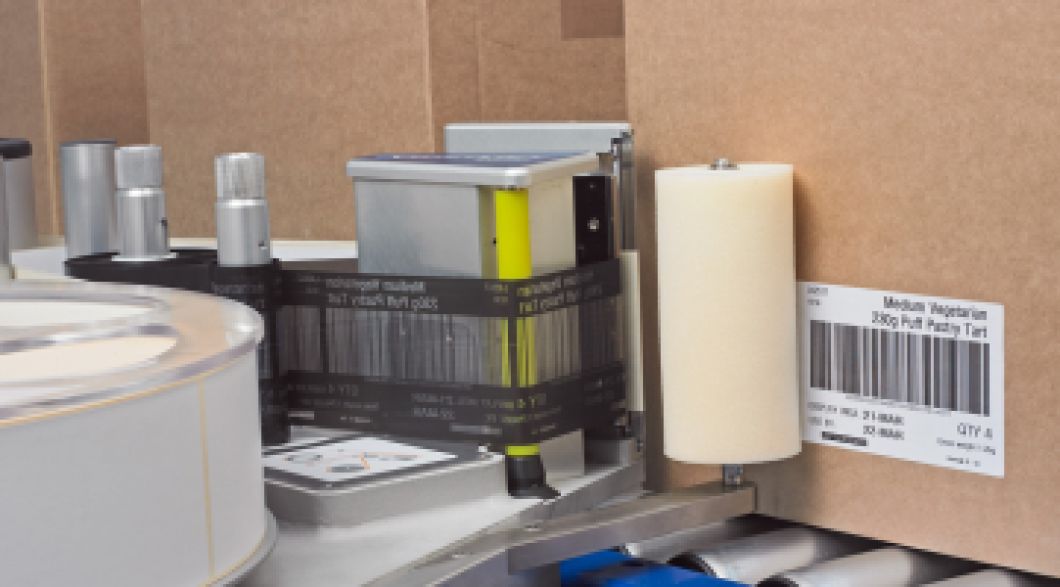
What is an automatic barcode label applicator?

A barcode applicator is an automated system that applies pre-printed barcode labels to products, packages, or pallets. This technology eliminates the need for manual labeling, reducing errors and increasing efficiency.

What are the applications of barcode printers in Indian manufacturing?

  • Manufacturing: Industrial manufacturers in India use barcode label printers for part identification, WIP tracking, and GS1-compliant label printing on components and finished goods — supporting inventory management and supply chain integration.
  • Pharmaceuticals: Pharmaceutical manufacturers use barcode label printers for CDSCO-mandated product serialisation — printing unique 2D DataMatrix barcodes on cartons and labels for track-and-trace compliance under Schedule M.
  • Retail & FMCG: FMCG and retail manufacturers in India print EAN-13 and GS1-128 barcodes on product labels and outer cartons — mandatory for retail shelf scanning, inventory management, and supply chain traceability.
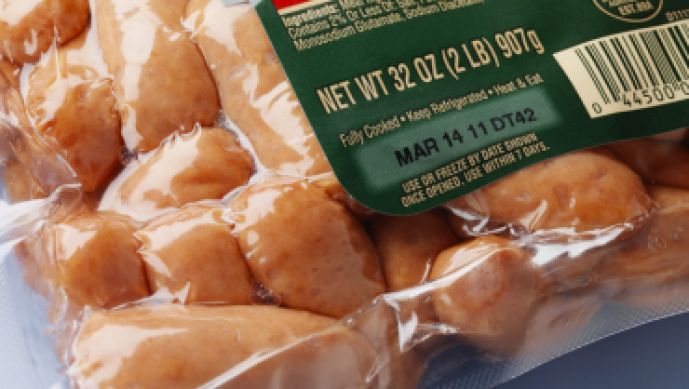
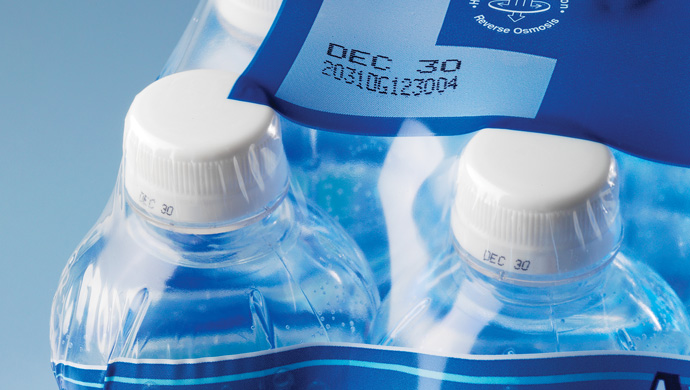
  • Food & Beverage: Food and beverage producers print FSSAI-mandated batch codes, expiry dates, and GS1 barcodes on product labels — enabling regulatory compliance and supply chain traceability from plant to retail.
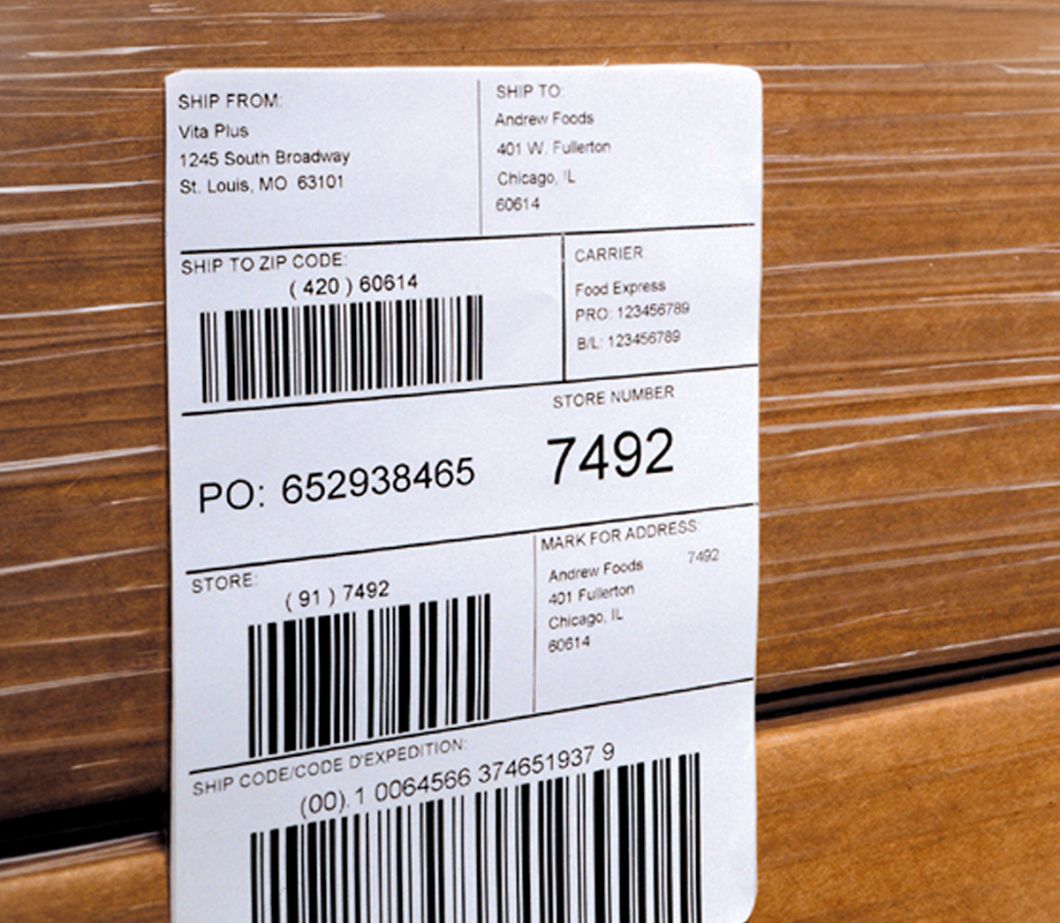
  • Logistics & Warehousing: Logistics and warehouse operations print shipping labels, pallet barcodes, and GS1-128 logistics labels for accurate order fulfilment, scan-based tracking, and e-commerce dispatch management.

What are the benefits of industrial barcode label printers for manufacturers?

  • Increased in efficiency: Automated barcode label printing eliminates manual labelling, increasing throughput and reducing operator time per unit by up to 80% on high-volume lines.
  • Accuracy of information: Machine-printed barcodes eliminate transcription errors — every label contains exactly the correct data, reducing mislabelling, returns, and compliance failures.
  • Cost-Effectiveness: Industrial barcode printers reduce the total cost of labelling by eliminating manual rework, rejected shipments, and the labour cost of manual labelling at scale.
  • Traceability: GS1-compliant barcodes and 2D codes enable end-to-end product tracking from the production line to the retail shelf — supporting recalls, audits, and regulatory reporting.
  • Meeting Industry standard Compliance: Barcode label printers support mandatory GS1, CDSCO, FSSAI, and Legal Metrology compliance requirements for barcode printing on packaged goods sold in India.

Types of barcodes printed by industrial barcode label printers

Barcode typeUse in IndiaCommon industries
EAN-13 / EAN-8Retail product identification — mandatory for all products sold through Indian retail chainsFMCG, food & beverage, consumer goods
Code 128 / GS1-128Shipping, logistics, and pallet labelling for supply chain traceabilityManufacturing, logistics, warehousing
QR CodeConsumer engagement, product authentication, and government e-invoicingFMCG, consumer goods, regulated products
2D DataMatrixPharmaceutical serialisation under CDSCO — unique identifier per pack for track and tracePharmaceuticals, medical devices
Code 39 / Code 93Industrial part marking and internal inventory trackingAutomotive, engineering, manufacturing

Why Indian manufacturers choose Videojet for barcode label printing

  • GS1-compliant barcode printing: Pre-validated EAN, Code 128, QR, and 2D DataMatrix templates for retail, pharma, and logistics compliance in India
  • Widest technology range: Thermal transfer, TIJ, and laser barcode printing solutions — one partner for every substrate, label stock, and production speed
  • 170+ service engineers across India: Guaranteed response times at all major FMCG, pharma, and logistics manufacturing hubs
  • CLARiSUITE software: Centralised barcode data management, remote printer monitoring, and ERP/WMS integration across all printers on the line

Frequently asked questions — barcode label printers in India

What is an industrial barcode label printer?

An industrial barcode label printer is a high-speed printing system that produces barcode labels — containing EAN, QR, or 2D DataMatrix codes — for attachment to products, packaging, and pallets. Used on production lines in FMCG, pharma, logistics, and manufacturing for inventory tracking, regulatory compliance, and supply chain traceability.

Which barcode printer is best for pharmaceutical serialisation in India?

Thermal inkjet (TIJ) printers are preferred for pharmaceutical carton serialisation in India — delivering high-resolution 2D DataMatrix and QR codes compliant with CDSCO track-and-trace requirements. Videojet’s Wolke m610 OEM is specifically designed for pharma line integration with global track-and-trace data handling.

What is the difference between thermal transfer and direct thermal barcode printing?

Thermal transfer barcode printers use a heated ribbon to print onto any label stock — producing durable, long-lasting barcodes for harsh environments. Direct thermal printers print directly on heat-sensitive label material without ribbon — ideal for short-lifecycle logistics and shipping labels where cost is a priority.

Is GS1 barcode printing mandatory for products sold in India?

GS1 barcode standards are mandatory for products sold through organised retail chains in India. EAN-13 barcodes are required for retail shelf scanning and inventory management. Pharmaceutical manufacturers must print CDSCO-compliant 2D DataMatrix codes on cartons under Schedule M serialisation requirements.