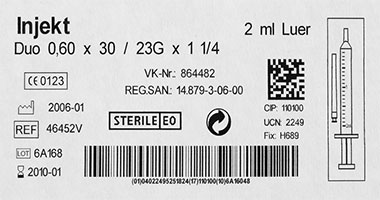
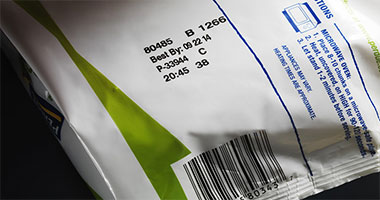
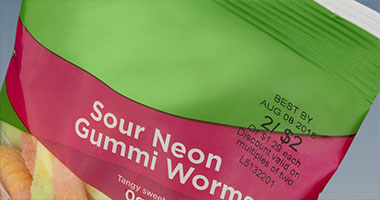
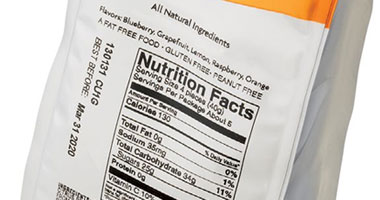
Expiry date printing machines help manufacturers print expiry dates, MFD dates, batch numbers, and variable data on products and packaging — automatically, at line speed — for traceability, regulatory compliance, and production efficiency.
Industrial date coding solutions are essential across food, beverage, pharmaceutical, cosmetics, and FMCG industries in India to meet FSSAI, CDSCO, and Legal Metrology requirements and support accurate product identification.
Quick answer
An expiry date printing machine is an industrial coding system that automatically prints expiry dates, MFD dates, best-before dates, and batch codes directly onto products and packaging — at production line speed, without stopping the line.
What is Expiry Date Printing?
Expiry date printing is the process of coding expiry dates, MFD dates, best-before dates, and batch numbers directly onto products and packaging during production. In India, this is a legal requirement under FSSAI, the Drugs & Cosmetics Act (CDSCO), and the Legal Metrology (Packaged Commodities) Rules across food, pharma, and consumer goods.
- Comply with FSSAI, CDSCO, and Legal Metrology regulations
- Enable end-to-end product traceability and audit readiness
- Support fast, targeted product recalls
- Prevent consumption of expired products — direct consumer safety measure
- Eliminate manual stamping errors and line stoppages
India regulatory note
Under Indian law, expiry dates and MFD dates must be printed legibly on primary packaging. Non-compliance can result in product rejection, regulatory action, or recall orders.
MFD Date vs Expiry Date vs Best Before Date
| Date Type | Meaning | Regulated By |
|---|---|---|
| Manufacturing Date (MFD) | Date the product was made | Drugs & Cosmetics Act · Legal Metrology Rules |
| Expiry Date (EXP) | Date after which product is unsafe to use — health risk beyond this point | CDSCO · FSSAI · Drugs & Cosmetics Act |
| Best Before Date (BBD) | Product retains peak quality until this date — may still be safe after | FSSAI Food Safety Regulations |
| Use By Date | Stricter than BBD — product must not be used after this date | FSSAI · EU-aligned standards |
Types of Expiry Date Printing Technologies
Different packaging substrates and line speeds require different date coding technologies. The four main options used in India:
Continuous Inkjet (CIJ)
Non-contact printing at high speed on curved, wet, or uneven surfaces. Most widely used for FMCG primary packaging in India.
Best for: PET bottles · Beverage cans · Pharma vials · FMCG packaging · Pipes & cables
Laser marking
Permanent, smudge-proof codes with zero consumable cost. Preferred where tamper-resistance and code durability are critical.
Best for: Aluminium cans · Glass bottles · Pharma packaging · Industrial parts
Thermal Inkjet (TIJ)
High-resolution 300–600 DPI for barcode-intensive secondary packaging. Low maintenance, low entry cost.
Best for: Outer cartons · Labels · Secondary packaging · Barcode printing
Thermal Transfer Overprinting (TTO)
High-quality, registration-accurate coding for flexible packaging lines running VFFS/HFFS equipment.
Best for: Pouches & sachets · Laminated films · FMCG flexible packaging
Industrial Applications
| Application | Recommended Technology | Key Requirement |
|---|---|---|
| PET bottle expiry date printing | CIJ | Non-contact; high-speed; curved surface |
| Flexible pouch & sachet coding | TTO | High-resolution on film; tight registration |
| Carton & outer box date coding | TIJ | Scan-readable barcodes; large date info |
| Pharmaceutical blister & carton | CIJ / TIJ / Laser | Serialisation; 2D DataMatrix; GS1 compliance |
| Glass bottle & jar coding | Laser / CIJ | Permanent; smudge-proof; chemical-resistant |
| Beverage can date coding | CIJ / Laser | Heat-resistant; high-speed |
| FMCG sachet & laminate coding | TTO / CIJ | MFD, expiry, MRP on flexible substrates |
How to Choose the Right Expiry Date Printing Machine
| Selection Factor | What to Evaluate |
|---|---|
| Packaging substrate | Rigid (bottle, can) or flexible (pouch, film)? Porous (carton) or non-porous (metal, glass)? |
| Line speed | CIJ handles 10+ m/s. TTO suits flexible lines at moderate speeds. |
| Code resolution | Date + text only, or 1D/2D barcodes? TIJ and laser offer higher DPI for scan-critical codes. |
| Code permanence | Must codes survive moisture, abrasion, or chemicals? Laser delivers the most durable marks. |
| Regulatory needs | FSSAI date format, CDSCO serialisation, GS1? Confirm software capabilities before purchase. |
| Total cost of ownership | Calculate cost-per-code including ink/ribbon and maintenance — not just machine price. |
Videojet tip
Always calculate cost-per-code over 3–5 years — including ink/ribbon, maintenance, and downtime. A lower upfront price can mean a significantly higher total cost of operation.
Why Manufacturers in India Choose Videojet
Videojet is the world’s No. 1 coding and marking brand — 400,000+ installations, 135 countries, 45+ years of expertise, and the deepest service network in India.
- Widest technology portfolio: CIJ, laser, TIJ, and TTO — one partner for all packaging types
- 170+ service engineers in India: Guaranteed response times across all major manufacturing hubs
- CLARiSUITE™ software: Centralised date management, remote monitoring, and ERP/MES integration
- Compliance-ready: Pre-validated FSSAI, CDSCO, Legal Metrology, and GS1 date format templates
Frequently Asked Questions
An industrial coding system that automatically prints expiry dates, MFD dates, batch numbers, and variable data on products and packaging during production — at full line speed, without manual intervention.
Yes. Under FSSAI, the Drugs & Cosmetics Act, and Legal Metrology Rules, expiry and MFD date printing is mandatory on all packaged food, pharmaceutical, and consumer goods sold in India.
MFD is when the product was made. Expiry Date is when it is no longer safe to use. Best Before Date indicates when the product is at peak quality — it may still be safe after this date. All three may need to be printed depending on product category and regulation.
Continuous Inkjet (CIJ) — non-contact, high-speed, works on curved surfaces, supports fast-drying inks for wet and chilled environments.
Yes. Laser systems print permanent, high-contrast codes on glass, plastic, metal, and film — with no consumables and zero risk of smudging or tampering.
Thermal Transfer Overprinters (TTO) — designed for flexible packaging lines, delivering high-quality registration-accurate codes on pouches, films, and laminates.
Batch coding identifies the production batch for traceability. Expiry date coding indicates when the product expires. Both are required on most compliant primary packaging in India.
Categories
Contact Us
Sales and Marketing contact:
9:30 AM – 6:30 PM (Monday – Friday)
Service and Technical support