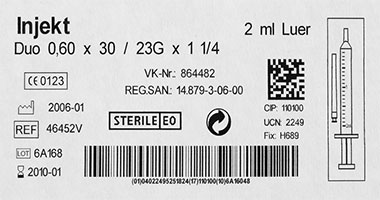
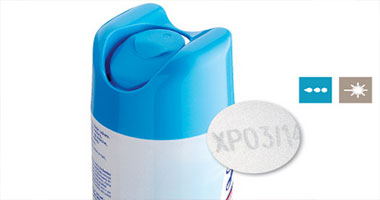
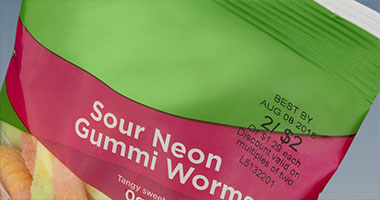
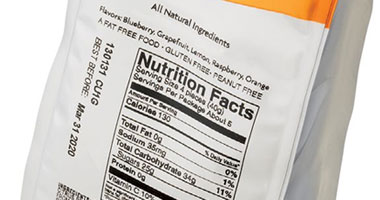
Batch number printing machines help manufacturers print batch codes, expiry dates, lot numbers, MFD dates, and variable data on products and packaging — automatically, at production line speed — for traceability, regulatory compliance, and production efficiency.
Quick answer
A batch number printing machine is an industrial coding system that prints unique batch codes, lot numbers, MFD/expiry dates, barcodes, and traceability data directly onto products and packaging — automatically, without stopping the production line.
What is batch number printing?
Batch number printing is the process of printing a unique identification code on a product or its packaging to identify items manufactured during a specific production cycle. The batch number allows manufacturers, distributors, retailers, and regulatory authorities to trace a product back to its origin.
In India, batch number printing is a mandatory requirement under the Drugs & Cosmetics Act, FSSAI regulations, and the Legal Metrology (Packaged Commodities) Rules across pharmaceutical, food, and FMCG industries.
- Track products throughout the supply chain and distribution network
- Support fast, targeted product recalls with minimal disruption
- Improve inventory management and FIFO stock rotation
- Meet FSSAI, CDSCO, and Legal Metrology compliance requirements
- Improve quality control at every production stage
- Authenticate products and reduce counterfeiting risk
Batch number vs lot number — what is the difference?
Both terms identify products from a specific production run and are often used interchangeably. The distinction is industry-specific:
| Term | Common usage in India | Typical industries |
|---|---|---|
| Batch number | Products from a single production run with identical inputs | Pharmaceuticals, chemicals, process manufacturing |
| Lot number | Products produced within a defined time window, may span multiple batches | Food, beverage, FMCG, consumer goods |
| Both terms | Used interchangeably in many industries — same core purpose | All regulated manufacturing sectors |
India regulatory note
Under the Drugs & Cosmetics Act, Legal Metrology Act, and FSSAI regulations, batch number or lot number must be printed legibly on primary packaging. Non-compliance can result in regulatory action, product rejection, or recall orders.
What is a batch coding machine?
A batch coding machine is an industrial printing system that prints variable information — batch numbers, dates, barcodes, serial numbers — directly onto products and packaging during production, integrated with your conveyor or PLC for real-time, zero-stoppage operation.
Modern batch coding machines can print:
- Batch numbers and lot numbers
- Manufacturing dates (MFD) and expiry dates (EXP / BB)
- Barcodes (1D) and QR codes / DataMatrix (2D)
- MRP, shift codes, and operator IDs
- Serial numbers and unique identifiers for serialisation
Why batch number printing matters for Indian manufacturers
| Business need | How batch coding addresses it |
|---|---|
| Regulatory compliance | Meets FSSAI, CDSCO, and Legal Metrology requirements for mandatory batch and lot coding on packaged goods |
| Product traceability | Enables end-to-end product tracking from production floor to retail shelf and beyond |
| Recall management | Allows targeted, batch-specific recalls — minimising financial and reputational damage |
| Anti-counterfeiting | Permanent, tamper-resistant codes authenticate products throughout the distribution chain |
| Production efficiency | Automated inline coding eliminates manual stamping, reducing labour cost and coding errors |
| Inventory management | Supports FIFO stock rotation and integration with warehouse management systems |
Benefits of automated batch coding machines
- Real-time variable data printing — batch numbers update automatically per job or shift
- Reduced manual coding errors — eliminates human stamping mistakes that cause compliance failures
- Faster production line integration — prints at full conveyor speed with zero manual intervention
- Improved production uptime — fewer stoppages for manual re-coding or offline marking
- Reduced packaging waste — accurate first-time printing reduces rework and rejection
- Consistent print quality — repeatable codes on every unit, every shift
- Centralised message management — update batch data from one point across all printers on the line
Types of batch coding technologies
Different substrates, line speeds, and regulatory requirements call for different coding technologies. Here are the four main options used in Indian manufacturing:
Continuous Inkjet (CIJ)
Non-contact printing at high speed on curved, wet, or uneven surfaces. Most widely deployed batch coding technology in India.
Best for: PET bottles | Beverage cans | Plastic packaging | Pharma vials | Pipes & cables
Laser marking
Permanent, smudge-proof codes with zero ink/ribbon consumable cost. Preferred for tamper-resistance and long product life.
Best for: Aluminium cans | Glass bottles | Pharma packaging | Industrial parts
Thermal Inkjet (TIJ)
High-resolution 300–600 DPI printing for barcodes and carton coding. Low maintenance, low entry cost.
Best for: Outer cartons | Barcode printing | Labels | Secondary packaging
Thermal Transfer Overprinting (TTO)
High-quality, registration-accurate coding designed specifically for flexible packaging lines.
Best for: Pouches & sachets | Laminated films | FMCG packaging · VFFS/HFFS lines
Industrial applications
| Application | Recommended technology | Key requirement |
|---|---|---|
| PET bottle batch coding | CIJ | Non-contact printing at line speed on curved surfaces |
| Aluminium can coding | CIJ / Laser | High-speed, heat-resistant coding |
| Flexible pouch / sachet coding | TTO | High-quality marks on film with tight registration |
| Carton & corrugated box coding | TIJ | Scan-readable barcodes; large batch information |
| Pharmaceutical blister / carton | CIJ / TIJ / Laser | Serialisation, 2D DataMatrix, GS1 compliance |
| Glass bottle coding | Laser / CIJ | Permanent, smudge-proof marking |
| Cable and pipe extrusion marking | CIJ / Laser | Continuous marking at extrusion speed |
| FMCG sachet & film coding | TTO / CIJ | Date, batch, MRP on flexible substrates |
How to choose the right batch coding machine in India
| Selection factor | What to evaluate |
|---|---|
| 1. Packaging substrate | Rigid (bottle, can) or flexible (pouch, film)? Porous (carton) or non-porous (metal or glass)? |
| 2. Production line speed | CIJ handles up to 10+ m/s. TTO is better suited to flexible packaging lines at moderate speeds. |
| 3. Code content & resolution | Text and dates only, or 1D barcodes and 2D DataMatrix/QR codes? TIJ and laser offer higher DPI for scan-critical codes. |
| 4. Code permanence | Must the code withstand moisture, abrasion, or chemicals? Laser delivers the most durable marks. |
| 5. Regulatory requirements | GS1 compliance, serialisation, FSSAI or CDSCO mandated data formats? Confirm software capabilities before purchase. |
| 6. Total cost of ownership | Factor ink/ribbon cost, maintenance frequency, and integration complexity — not just machine price. |
Videojet tip
When comparing batch coding machines on price, always calculate the cost-per-code — factoring in ink/ribbon cost, maintenance time, and production downtime. A lower upfront price can mean a significantly higher total cost over 3–5 years.
Why manufacturers in India choose Videojet
Videojet is the world’s no. 1 coding and marking brand, with 400,000+ installations across 135 countries and over 45 years of industrial printing expertise.
- Widest technology portfolio — CIJ, laser, TIJ, and TTO from a single partner for your entire coding requirement
- Deepest service network in India — 170+ dedicated service engineers across all major manufacturing hubs
- Uptime-first design — engineered for 24/7 production environments with minimal planned maintenance
- CLARiSUITE software — centralised message management, remote monitoring, and production data integration
- Regulatory compliance support — pre-validated templates for FSSAI, CDSCO, and GS1 requirements
Frequently asked questions
A batch number printing machine is an industrial coding system that automatically prints batch codes, lot numbers, MFD/expiry dates, and variable data on products and packaging during production — without manual intervention.
Both identify products from a specific production run. In India, “batch number” is used in pharmaceuticals and chemicals under CDSCO rules; “lot number” is more common in food, FMCG, and beverage industries. Both serve the same purpose: traceability and recall management.
Yes. Under the Drugs and Cosmetics Act, Legal Metrology (Packaged Commodities) Rules, and FSSAI regulations, batch number or lot number printing is mandatory on pharmaceutical, food, and packaged consumer goods sold in India. Non-compliance can result in regulatory action, product rejection, or recall.
Continuous Inkjet (CIJ) is the most widely used technology for PET bottle batch coding in India. It provides non-contact printing at high line speeds, works on curved surfaces, and supports fast-drying inks for wet and chilled environments.
Pharmaceutical batch coding typically requires high-resolution printing for serialisation and 2D DataMatrix codes. Videojet laser marking systems and Thermal Inkjet printers are widely used in Indian pharma packaging for their precision, reliability, and compliance with CDSCO and GS1 requirements.
Yes. Laser marking systems provide permanent, high-contrast batch coding on glass, plastic, metal, aluminium, and film — with no ink or ribbon consumables and zero risk of smudging or fading.
Food & beverage, pharmaceuticals, cosmetics, FMCG, chemicals, agro-chemicals, automotive, building materials, cables & pipes, and industrial manufacturing — any sector where product traceability and regulatory compliance are required.
Categories
- Automatic Batch Coding Machine
- Automatic MRP Printing Machine
- Bagging Machines
- Bottle Filling Machines
- Carton Labeler
- Extruder Machines
- Flexible Product Packaging
- Food Packaging
- Forming Machines
- Product Marking
- Product Coding
- Production Lines
- Product Labeling
- Tetra Pack Printing
- Tracking & Traceability
- Vacuum Sealers
- Variable Data
Contact Us
Sales and Marketing contact:
9:30 AM – 6:30 PM (Monday – Friday)
Service and Technical support